- Your cart is empty
- Continue Shopping

Power Supply
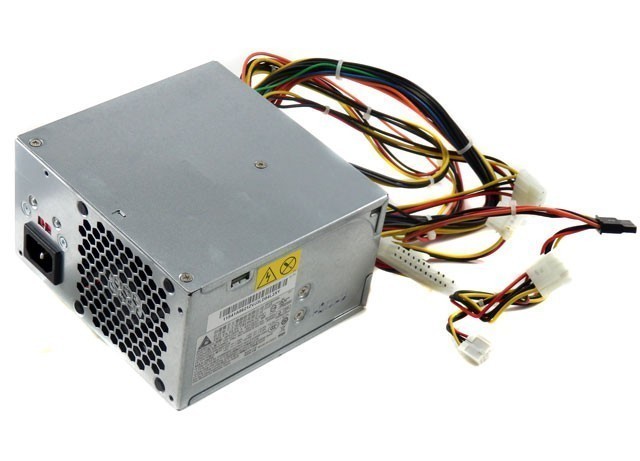
Power Supply Unit (PSU)
The Power Supply Unit (PSU) is an essential component in any personal computer (PC), as it is responsible for converting electrical energy from an external source into the various voltage levels required by the internal components of the system. Typically, the electricity supplied to a computer from a wall outlet is in the form of alternating current (AC). However, the internal circuitry and devices within a computer operate using direct current (DC). The power supply carries out this crucial conversion from AC to DC, ensuring stable and reliable operation of the entire system.
In most PCs, the power supply delivers standardized DC voltages, including +5 volts and +12 volts, which are used for different purposes. The +5V output is primarily used to power the logic circuitry found on the system’s circuit boards, including the motherboard, graphics card, and expansion cards. On the other hand, the +12V supply is used to power motor-driven components such as hard disk drives, CD-ROM/DVD drives, and cooling fans, which require higher torque and energy.
As PC technology has evolved, newer systems and processors have demanded even lower operating voltages to improve energy efficiency and reduce heat output. Consequently, many modern power supplies also provide additional voltage rails, such as +3.3V or +2.8V, specifically designed to meet the needs of contemporary CPUs and chipsets.
Devices within the PC connect to the power supply through various standardized connectors. Larger devices such as hard drives and CD/DVD drives typically use Molex connectors, which provide both +5V and +12V power. Smaller peripherals like floppy drives use mini-Molex connectors, designed for their lower power requirements. The motherboard receives its power through specific multi-pin connectors traditionally known as P8 and P9, though newer systems often use 20-pin or 24-pin ATX connectors instead, alongside additional 4-pin or 8-pin connectors for CPU power.
Reviews
There are no reviews yet.